The tier everyone disputes
A band of brands sits between mall fashion and the European leather houses, called contemporary by retailers and accessible designer by shoppers. The category is real and commercial, and it has rules: designer-level branding, department-store distribution, a large outlet browse collection business, and bags priced in the low hundreds rather than the low thousands. Marc Jacobs, Coach and Michael Kors are habitually grouped there by buyers, by store floorplans and by search behavior, which is why the query „marc jacobs vs coach” exists. The argument is rarely about which brand is better made, because at this level construction gaps are narrower than branding suggests. Status is the usual subject, and measuring status honestly is the hardest job of all. This article sets out what is verified about one of the three and stays careful about the other two.
Where Marc Jacobs puts itself, using its own words
Product data published by the brand itself, not analyst commentary, is the most useful evidence, and it files its handbags as contemporary rather than luxury. More of the debate is settled by that single tag than by any editorial ranking, because a house that considered itself a luxury maison would not file its bags that way. Marketing reinforces the positioning: the brand publishes a Jacobs line reading „No more Birkins, only Tote Bags”, framed explicitly as a refusal of exclusivity and elitism. Asked „is marc jacobs luxury”, the correct answer is that the company does not claim to be, and prices accordingly. What it does claim is designer authorship at a price a student or a first-job buyer can afford, which is a different promise and easier to keep. A historical note belongs here: Marc by Marc Jacobs operated from 2001 until it was discontinued in 2015, and the house has had no formal lower tier since.
Entry prices, and why only one column has numbers
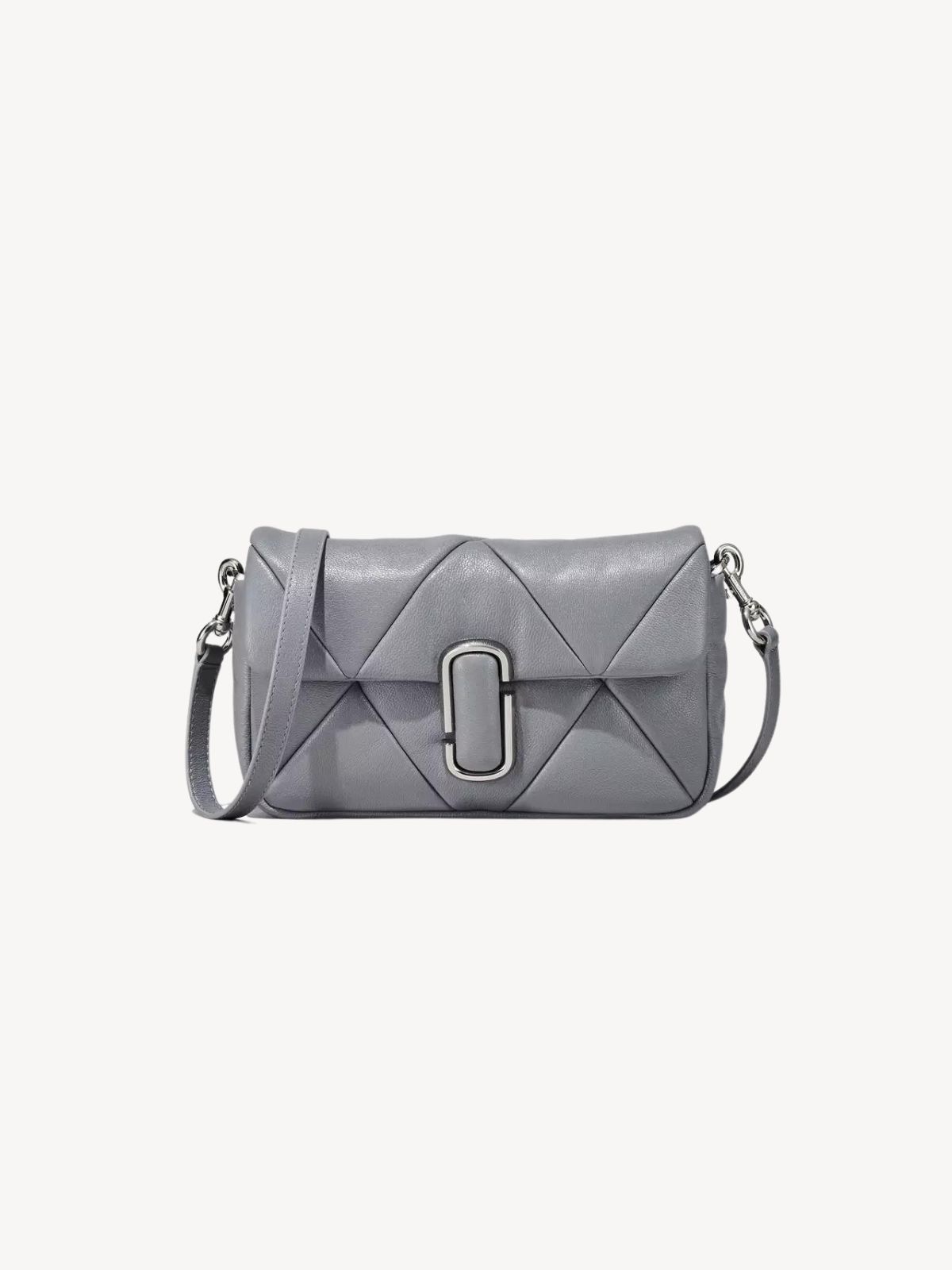
Every figure below is for Marc Jacobs, drawn from marcjacobs.com in the US and checked on 29 September 2026; prices vary by country and currency and change without notice. No Coach or Michael Kors prices appear anywhere in this piece, since competitor pricing moves constantly across seasons, regions and promotions, and a figure quoted in an article goes stale faster than a reader can act on it. Two minutes on each brand’s own site, on the day you shop, is the only reliable method. On the Marc Jacobs side, the cheapest route into a marc jacobs bag is the canvas version of The Tote Bag at about $150 for the Crossbody size, $178 small, $198 medium and $228 large. Roughly $398, $498 and $598 by size is where leather takes the same silhouette, while the Shoulder Bags category stretched from about $198 to $698 that day, and The Snapshot sat at about $325 to $328. The clearest single indicator of where a marc jacobs price actually lands is that spread: entry near $150 and a ceiling under $800 across most categories.
Materials, and what a shopper can check without a lab
Setting a brand’s best bag against a rival’s cheapest is the standard way a comparison goes wrong. Because Marc Jacobs publishes its specifications, the substance is checkable: the canvas totes are cotton canvas, the Leather Medium Tote is full-grain leather, and The Snapshot comes in Saffiano leather with a faille lining and a dust bag included. What it says about wear tells you more. The brand’s own documentation states that canvas „is known for its unique characteristics and can develop a vintage, worn-in appearance over time”, that this aging is intentional and not a manufacturing defect, that buyers should not get the canvas wet because it can stain, and that no cleaning agents are recommended on its fabrics. On leather it is equally blunt, noting that leather is durable but not completely resistant to scratches and scuffs. This is consistent with the buyer data: on Zappos, an authorized retailer, the Canvas Medium Tote held 4.3 out of 5 from 32 reviews and The Snapshot 4.8 from 40, the most repeated tote complaint being logo lettering peeling. Do the same with the other two brands and read their own care and warranty pages, because that is where a company is most honest about what its materials will do.
Distribution, outlets and the small print that actually costs money
Tier shows up in distribution more clearly than in any advertisement. The Marc Jacobs store locator showed 103 locations on 29 September 2026, and the split is the story: 46 boutiques and 57 outlets, so more than half the physical network is off-price. One boutique serves Europe, on Regent Street in London, and the rest of the continent is served by outlets. What matters more than the count is the fine print: merchandise bought at any Marc Jacobs outlet is final sale and cannot be returned or exchanged, and the brand specifies that final sale items cannot be repaired or replaced, which puts outlet purchases outside the one-year warranty. The terms on full-price online orders are different: 30 days to return from shipment, a free prepaid UPS label, free ground shipping over $50, and no exchanges on any order. Look up each rival brand’s outlet count and read its outlet return policy before assuming an outlet bag carries the same protection as a boutique one.
What this comparison cannot settle
Resale is the first of them, and this article cannot settle it. Reliable resale-value data for Marc Jacobs did not turn up in the research behind this article: the brand does not appear in the value-retention rankings published by the major resale platforms, and at least one authentication service does not list it at all. Missing coverage is not a measured depreciation figure, so this article makes no claim about whether a Marc Jacobs bag retains its value, in either direction. The second is any head-to-head on revenue, unit sales or build quality against Coach or Michael Kors, because no verified figures for those companies were to be had and inventing them would be worse than silence. The third is customer service: the brand’s own direct-to-consumer site carries a low third-party review score, but such scores are complaint-weighted and cannot be measured against rivals without equivalent data. One further piece of context belongs here: ownership changed on 1 September 2026, when WHP Global and G-III Apparel Group completed their acquisition, so pricing and distribution strategy could shift from here.
How to run the comparison on your own
The workable method is to compare like with like, on the same afternoon. Choose one silhouette you would genuinely carry, in a single material, and price it across all three brands on their own sites, not on aggregators. Four things actually differ, and those are what to compare: the material named in the specification, the warranty term and what cancels it, the return window and whether exchanges exist, and whether the item is boutique or outlet stock. Many shoppers reach these brands by typing the singular „marc jacob”, and that spelling can steer you toward unauthorized sellers, where none of the above applies and no warranty is in force. Stay with the brand’s own site, its boutiques or named authorized retailers such as Saks Fifth Avenue, Neiman Marcus, Bloomingdale’s, Nordstrom, Dillard’s or Farfetch, keep the receipt, and remember that Marc Jacobs predicates its warranty on proof of purchase from an authorized vendor. One closing piece of context, and its date is deliberate: back in April 2018 the analyst Luca Solca told Glossy that Marc Jacobs „missed a great opportunity to be a relevant accessible brand, in the same vein as Michael Kors”, a judgment handed down years before The Tote Bag became the brand’s best seller, and worth reading as history, not a current verdict.
| Comparison dimension | Verified for Marc Jacobs (29 September 2026) | What you should check for the others |
|---|---|---|
| Self-declared tier | Product data tags handbags as contemporary, not luxury | Each brand’s own category and press language, in its own words |
| The entry price | Canvas Tote Bag from about $150; leather sizes about $398 to $598 | Today’s price for one comparable bag on each brand’s own site |
| Category ceiling | Shoulder Bags about $198 to $698; Totes about $278 to $798 | The dearest bag each brand sells in the same category |
| Materials used | Cotton canvas, full-grain leather, Saffiano on The Snapshot | The material named in each product specification, not the campaign |
| Distribution | 103 locations, split 46 boutiques and 57 outlets | Each store locator’s boutique-to-outlet ratio |
| Terms at the outlets | Final sale, no returns or exchanges, outside the one-year warranty | Whether outlet stock carries the same warranty and returns |
| Returns, online | 30 days from shipment, a free UPS label, no exchanges at all | Return window, who pays shipping, exchanges offered or not |
| Resale value | No reliable data found; no claim made here | Live sold listings on a reputable platform, not brand marketing |